
Monograph: Wild Carrot
- Oct 7, 2025
- 4 min read
A wild and unassuming beauty, the white umbels of Queen Anne’s Lace crown roadsides and meadows across Nova Scotia. Often mistaken for a weed, this resilient biennial bridges field and pharmacy, carrying centuries of use as food, medicine, and fertility guardian. Beneath its lacy bloom lies a complex plant that nourishes, regulates, and reminds us that “common” never means simple.

Key Therapeutic Categories
Digestive tonic • Carminative • Diuretic • Emmenagogue • Urinary antiseptic • Mild hormonal modulator • Nutrient-rich food herb
Primary Attributes
Actions: Bitter tonic, carminative, mild diuretic, anti-inflammatory, antispasmodic, emmenagogue, galactagogue (traditional), vulnerary
Energetics: Warming, slightly drying; dispersive through the digestive and urinary tracts; grounding to the root and stimulating to the seed
Taste: Aromatic, slightly bitter, resinous, earthy
Methods: Infusion (leaf/flower), decoction (root), tincture (seed/root), culinary inclusion, infused oil
Uses
Supports sluggish digestion and mild liver congestion
Eases bloating, gas, and intestinal cramping
Promotes gentle diuresis and urinary clearance
Traditionally used to support delayed menses or ease menstrual stagnation
Employed historically as a post-coital contraceptive (seed)
Applied externally for minor abrasions or dry, irritated skin
Strengthens connective tissue and offers gentle mineral support as a wild food

Botanical & Cultural Context
Family: Apiaceae
Part Used: Entire plant (root, leaf, flower, seed)
Native Range: Europe and western Asia; naturalized throughout North America.
Nova Scotia Status: Abundant naturalized species thriving along roadsides, meadows, and coastal fields
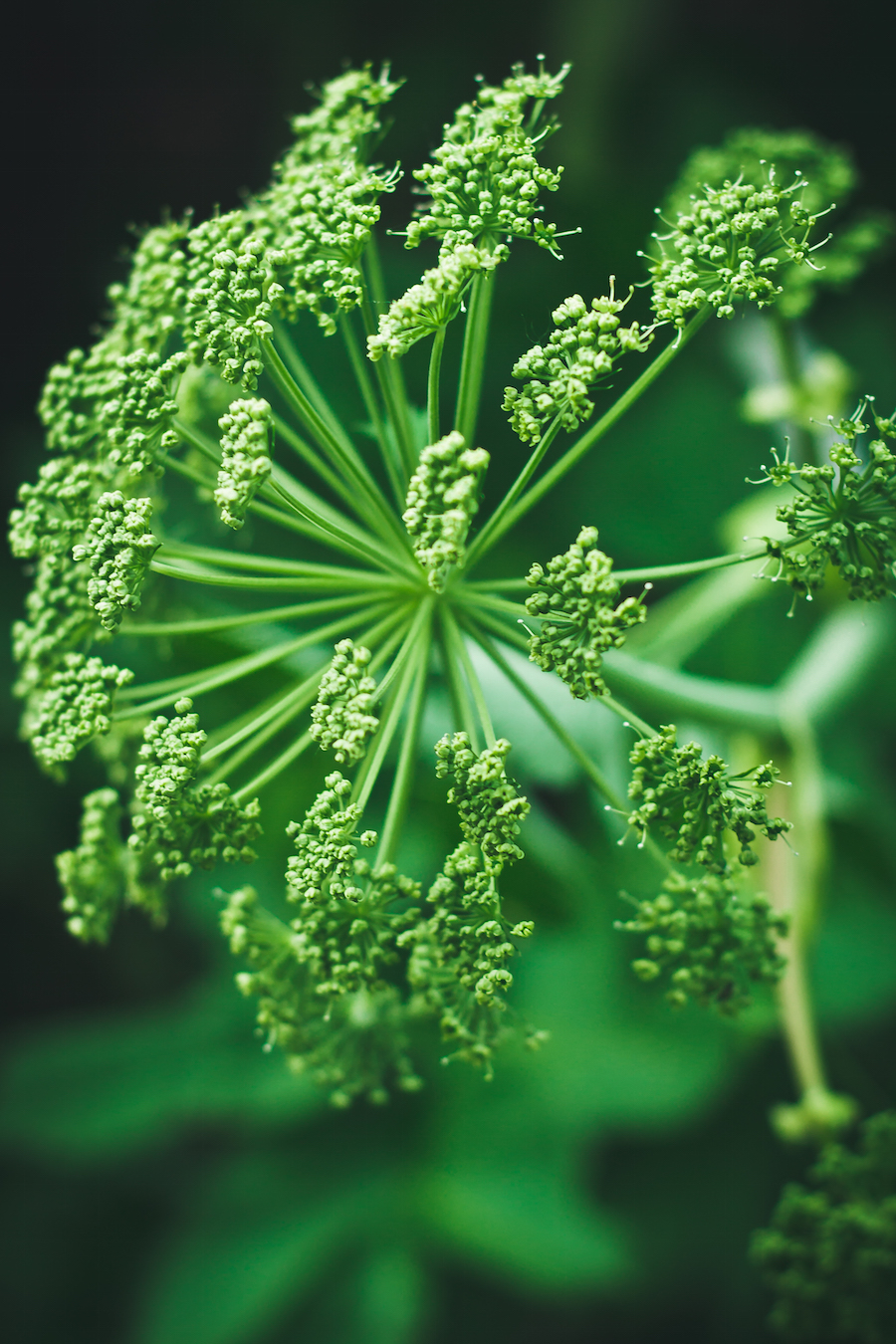
Botany: A biennial producing a rosette of finely divided leaves the first year and an umbel of delicate white flowers the second. The root of the wild plant is pale, slender, and aromatic—distinctly less sweet than the domestic carrot.
Sustainability / Ethical Harvesting
Daucus carota is not at risk according to United Plant Savers and is widely naturalized. Ethical guidelines still apply:
Harvest from clean soils, away from road runoff and agricultural chemicals.
Avoid confusion with the toxic Water hemlock (Cicuta maculata) and Poison hemlock (Conium maculatum); correct identification is critical.
Take small amounts, leaving root crowns to reseed.
Favor seed and aerial parts to minimize soil disturbance.

Constituents & Pharmacology
Volatile oils: primarily carotol, daucene, limonene, α-pinene, β-bisabolene—responsible for diuretic, carminative, and mild antimicrobial actions (Hoffmann, 2003; Mills & Bone, 2013).
Flavonoids: luteolin, apigenin—anti-inflammatory, antioxidant.
Coumarins: scopoletin, umbelliferone—vascular support and mild spasmolytic effect (Brinker, 2018).
Carotenoids & minerals: calcium, potassium, silica—nutritive tonics.
Seeds: contain essential oils and falcarinol derivatives with estrogenic modulation and smooth-muscle activity (Winston & Maimes, 2007).
Mechanistically, the volatile oil constituents enhance urinary flow and digestion, while the coumarin-flavonoid matrix exerts mild anti-inflammatory and hormone-balancing effects.
Historical Uses
Ancient Greece & Rome: Recorded by Dioscorides and Pliny as a diuretic and carminative root (Hoffmann, 2003).
Medieval Europe: Used for “stone and strangury” (urinary gravel) and as a warming digestive.
Folk contraception: The seeds chewed post-coitus as an “herbal morning-after” in European and later Appalachian traditions (Riddle, 1997).
Culinary: Wild root as food and tonic through winter; leaves used as bitters in spring tonics.
Cultivation & Harvesting
Prefers full sun and well-drained soils.
Sow directly outdoors; self-seeds readily.
Root: Harvest in autumn of the first year before flowering.
Seed: Collect umbels when dry and brown; thresh gently.
Leaf/Flower: Gather mid-summer when aroma peaks.Dry in thin layers out of direct sunlight; store sealed from moisture.
Medicinal Uses / Clinical Studies
While comprehensive clinical trials are limited, laboratory studies confirm several traditional actions:
Diuretic & renal support: Essential-oil fractions increase urine output in rat models without electrolyte imbalance (Shah et al., 2011).
Antioxidant & hepatoprotective: Root and seed extracts show free-radical scavenging and mild liver protection (Mills & Bone, 2013).
Antifertility effects: Animal studies reveal temporary inhibition of implantation with ethanolic seed extracts (Riddle, 1997; Winston & Maimes, 2007).
Clinically, herbalists employ wild carrot to support urinary tract health, digestive vitality, and menstrual regularity, not as a guaranteed contraceptive.
Preparation & Dosage
Form | Part | Typical Ratio / Dose | Notes |
Infusion | Leaf / flower | 1 tsp / cup hot water, 1–2 cups / day | Aromatic digestive, mild diuretic. |
Decoction | Root | 10 g / 500 mL simmered 15 min | Nutritive winter tonic. |
Tincture | Seed (1:2 50%) | 1–2 mL up to 3× daily | For menstrual stimulation, diuresis; monitor sensitivity. |
Infused Oil | Flower / seed | Topical for dry skin or lymphatic massage | Avoid contact with UV light post-application. |
Safety & Contraindications
Generally regarded as safe in culinary amounts.
Avoid in pregnancy: emmenagogue and potential antifertility effects (Mills & Bone, 2013).
Dermatitis risk: Furocoumarins may cause photosensitivity in sensitive individuals.
Do not confuse with hemlock species, which are deadly; always verify purple-spotted stems = poisonous.
Essential-oil isolates should be avoided internally.
Species Highlights
Wild Carrot is the ancestral form of the cultivated carrot (Daucus carota subsp. sativus).
Its tenacity and adaptability mirror its medicine—grounding, stimulating, and sustaining.
In herbal energetics, it teaches discernment: a plant that offers both nourishment and caution, fertility and restraint.
Bioregionally, it thrives in the sandy soils and coastal meadows of southwestern Nova Scotia, contributing to pollinator diversity.
References
Brinker, F. (2018). Complex Herbs – Complete Medicines. Eclectic Medical Publications.
Hoffmann, D. (2003). Medical Herbalism: The Science and Practice of Herbal Medicine. Healing Arts Press.
Mills, S., & Bone, K. (2013). Principles and Practice of Phytotherapy (2nd ed.). Churchill Livingstone.
Riddle, J. M. (1997). Eve’s Herbs: A History of Contraception and Abortion in the West. Harvard University Press.
Shah, N. A., et al. (2011). Diuretic and antioxidant potential of Daucus carota root extracts. Journal of Ethnopharmacology, 135(2), 351–358.
Winston, D., & Maimes, S. (2007). Adaptogens: Herbs for Strength, Stamina, and Stress Relief. Healing Arts Press.
United Plant Savers. (2024). At-Risk and To-Watch Species List. https://unitedplantsavers.org
USDA PLANTS Database. (2024). Daucus carota L. https://plants.usda.gov


Comments